
The landscape of cardiovascular care is shifting toward earlier detection and prevention. One of the most important developments in recent years involves the screening and early identification of atrial fibrillation (AFib)—the most common sustained cardiac arrhythmia worldwide.
Updated guidance from the American College of Cardiology and the European Society of Cardiology now recommends opportunistic screening for AFib in adults over age 65 and in patients with conditions such as hypertension and sleep apnea.
For primary care providers, these new recommendations present both an opportunity and a challenge. Early AFib detection can significantly improve patient outcomes, but implementing large-scale screening can strain already busy clinical workflows. Advances in ambulatory cardiac monitoring are helping make this process more practical—allowing clinicians to screen more patients while maintaining efficient care pathways.
Why AFib Screening Matters
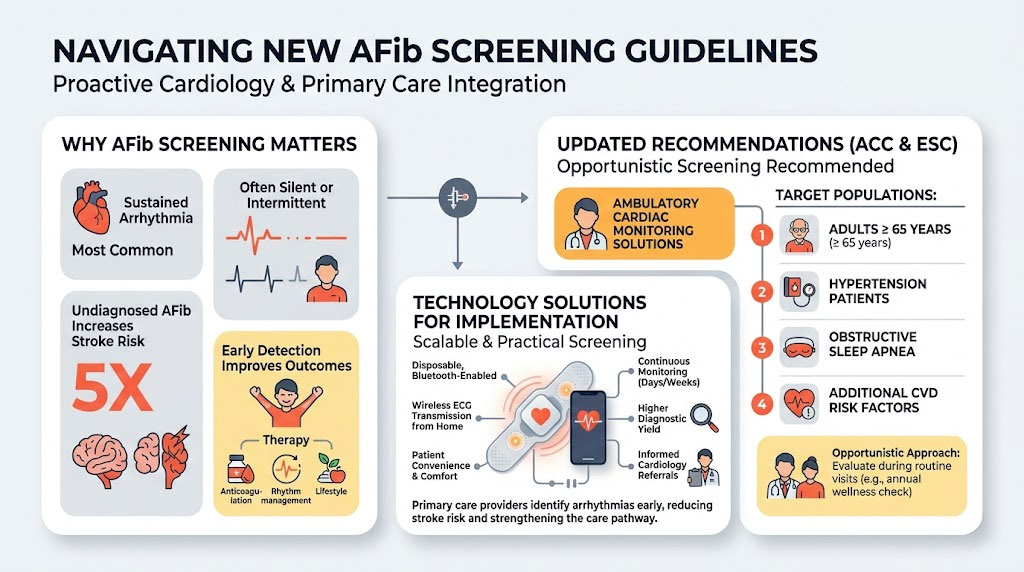
Atrial fibrillation affects millions of people globally and is a major contributor to stroke, heart failure, and cardiovascular hospitalization. One of the challenges in diagnosing AFib is that it is often silent or intermittent, meaning many patients experience few or no symptoms. Undiagnosed AFib increases the risk of stroke by up to five times.
However, when AFib is identified early, clinicians can intervene with therapies such as anticoagulation, rhythm management, and lifestyle modification to significantly reduce long-term complications. Traditional diagnostic tools—such as in-office electrocardiograms (ECGs) or short-term Holter monitors—capture only a brief snapshot of cardiac rhythm. Because many arrhythmias occur sporadically, these short monitoring windows may miss episodes of AFib.
What the New Screening Guidelines Recommend
Both the ACC and ESC encourage clinicians to incorporate opportunistic screening for AFib into routine care, particularly for patients with elevated cardiovascular risk.
Populations recommended for AFib screening include:
- Adults 65 years of age or older
- Patients with hypertension
- Individuals with obstructive sleep apnea
- Patients with additional cardiovascular risk factors
Opportunistic screening means evaluating patients for AFib during routine healthcare encounters—such as annual wellness visits, blood pressure checks, or chronic disease management appointments. Rather than waiting for symptoms to appear, clinicians are encouraged to actively assess heart rhythm in high-risk patients.
Implementation Challenges for Primary Care
While the new AFib screening guidelines are clinically compelling, implementing them in busy practices can be challenging. Primary care physicians seeking additional revenue for their practice with minimal disruption to their existing workflows are advised to work with a cardiac monitoring company that offers turnkey solutions to support an AFib screening program. Without the right tools, even well-intentioned screening efforts can create bottlenecks in the care pathway.
The Role of Ambulatory Cardiac Monitoring
Ambulatory cardiac monitoring has become an important tool in modern AFib screening strategies. These devices allow clinicians to evaluate a patient’s heart rhythm continuously over several days or weeks while the patient continues their normal daily activities. Extended monitoring improves the likelihood of detecting intermittent arrhythmias compared with brief in-office tests.
For AFib screening programs, ambulatory monitoring offers several advantages:
- Higher diagnostic yield for intermittent arrhythmias
- Continuous rhythm monitoring over extended periods
- Greater patient convenience and comfort
- More informed referral decisions for cardiology care
Supporting Scalable AFib Screening
Newer ambulatory cardiac monitoring technologies are designed to simplify the monitoring process for both clinicians and patients. Disposable, Bluetooth enabled devices transmit ECG data wirelessly from home, eliminating the need for patients to return to the clinic. This also alleviates the operational burden of cleaning and disinfecting required with traditional reusable devices.
A New Era of Preventive Cardiac Care
The updated AFib screening recommendations signal a broader shift toward preventive cardiology and earlier arrhythmia detection. By incorporating opportunistic screening into routine care, clinicians can identify atrial fibrillation earlier and help reduce the risk of stroke and other serious complications. For primary care practices, success will depend on adopting tools that make screening practical and scalable.