
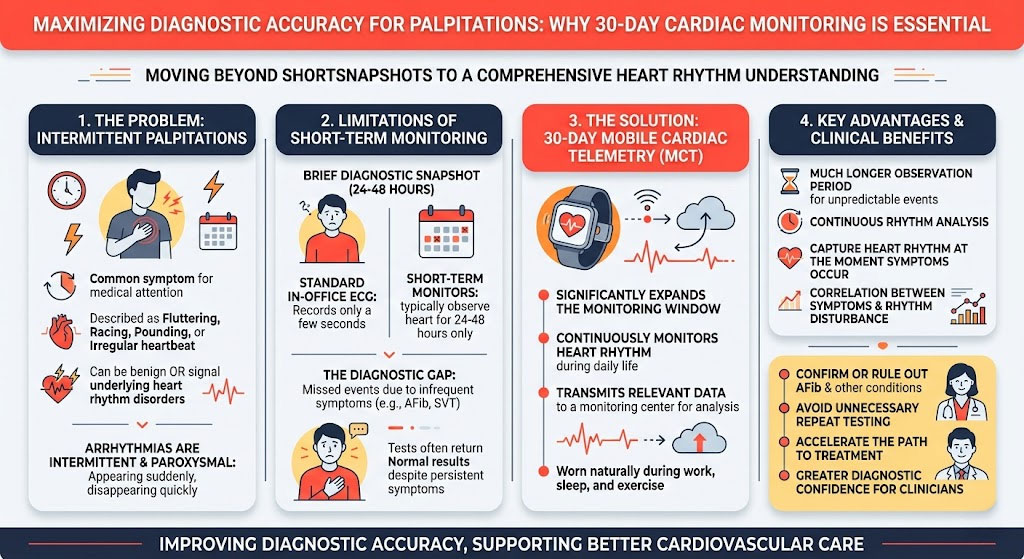
Heart palpitations are one of the most common symptoms that prompt patients to seek medical attention. Some describe them as a fluttering sensation in the chest, while others feel a racing, pounding, or irregular heartbeat. While many cases are benign, others may signal an underlying heart rhythm disorder that requires evaluation and treatment.
The challenge for clinicians is that many arrhythmias are intermittent. They may appear suddenly, disappear just as quickly, and remain undetectable during a routine office visit. Because of this unpredictability, diagnosing the cause of palpitations often requires extended heart rhythm monitoring. This is where 30-day Mobile Cardiac Telemetry (MCT) and other forms of ambulatory cardiac monitoring play an important role in achieving an accurate diagnosis.
Why Arrhythmias Can Be Difficult to Detect
Heart rhythm disorders are often paroxysmal, meaning they come and go unpredictably. Patients may experience symptoms only occasionally—perhaps once every few days or even once a month. When symptoms are infrequent, traditional diagnostic tools may not capture the event.
For example:
- A standard in-office electrocardiogram (ECG) records only a few seconds of cardiac activity.
- Short-term monitors typically observe the heart rhythm for just 24–48 hours.
- If the arrhythmia does not occur during that limited timeframe, the test may return normal results despite the patient continuing to experience symptoms.
This diagnostic gap is particularly important for conditions such as Atrial Fibrillation, supraventricular tachycardia, and other intermittent rhythm disturbances.
The Limitations of Short-Term Monitoring
Short-term cardiac monitoring can be helpful when symptoms occur daily. However, for many patients with intermittent palpitations, these tests provide only a brief snapshot of heart activity.
Some limitations of short monitoring periods include:
- Missed arrhythmia events due to infrequent symptoms
- Incomplete diagnostic data when episodes occur outside the monitoring window
- Repeated testing, which can delay diagnosis and treatment
- Increased patient frustration when symptoms remain unexplained
The Diagnostic Advantage of 30-Day Monitoring
30-day Mobile Cardiac Telemetry (MCT) significantly expands the monitoring window, giving clinicians a much better chance of capturing intermittent rhythm disturbances. MCT systems continuously monitor a patient’s heart rhythm and transmit relevant data to a monitoring center, where clinicians can review abnormal events.
Key advantages of 30-day monitoring include:
- A much longer observation period to detect intermittent arrhythmias
- Continuous rhythm analysis during normal daily activities
- Event detection when symptoms occur unexpectedly
- Greater diagnostic confidence for clinicians
Capturing the Event That Matters
When patients report palpitations, dizziness, or unexplained fatigue, the most important diagnostic goal is to capture the heart rhythm at the moment symptoms occur. This correlation allows clinicians to determine whether the episode is caused by an arrhythmia or by another factor entirely.
With 30-day monitoring, the likelihood of recording the relevant event increases significantly. This extended window helps clinicians confirm or rule out atrial fibrillation, identify abnormalities associated with symptoms, and accelerate the path to treatment.
A Practical Approach to Extended Monitoring
Modern monitoring technologies are designed to be convenient. Lightweight wearable devices allow patients to continue normal daily activities while clinicians receive ongoing rhythm data. Instead of relying on a brief snapshot, clinicians gain access to weeks of heart rhythm information, improving the chances of identifying clinically meaningful events.
Improving Diagnostic Accuracy for Palpitations
When evaluating intermittent palpitations, time is often the most important diagnostic variable. The longer the monitoring period, the greater the likelihood of capturing the arrhythmia responsible for symptoms. Thirty-day monitoring provides a broader window into heart rhythm behavior, allowing clinicians to detect issues that shorter tests might miss, ultimately supporting better cardiovascular care.